
Reviewed by Dr. Nicoletta Nica
Updated on 29/06/2026
Reading time 4 min.
Overview
Severity: Low
Life stage: All
Gastric dilatation-volvulus (GDV) is medically referred to as bloat in dogs and is a sudden and deadly emergency. During GDV, the stomach rapidly fills with gas, food, and fluid before twisting on itself. Then, the stomach twists upon itself. This twisting prevents anything from entering the stomach through either end and cuts off blood flow to the stomach and surrounding tissues.
Bloat develops very rapidly and will kill your pet within hours if treatment does not occur almost immediately. Although most common in large and deep-chested breeds of dogs, any breed can develop bloat. Due to the rapid nature of bloat’s onset and its high fatality rate, bloat is always considered a veterinary emergency.
Causes
There are many theories as to why bloat occurs, but there have been some risk factors identified. Eating large meals quickly allows the dog to swallow air along with their food, expanding the stomach.
The chances of the stomach twisting increase when the stomach is expanded. Dogs who eat a meal and then immediately engage in vigorous physical activity are also more likely to experience bloat.
Vigorous exercise causes a stomach that has been expanded due to eating to move improperly. Stress and anxiety at the time of feeding may also increase a dog’s chance of experiencing bloat, as stress can cause dogs to gobble down their food more rapidly. Some breeds are genetically predisposed to bloat.
These include the Great Dane, German Shepherd, Standard Poodle, and Doberman. Other contributing factors to bloat include feeding habits. Most notably, dogs fed once daily instead of multiple times a day and dogs who consuming dry kibble quickly are at an increased risk.
Symptoms
Early Warning Signs
- Restlessness or inability to relax
- Repeatedly attempting to vomit with little to no success (dry heaving)
- Drooling excessively
- Swelling or tightness in the abdomen
- Pacing around, indicating discomfort
Progressive and Severe Symptoms
- Rapid or labored breathing
- Pale or white gums
- Weakness or collapsing
- Fast heartbeat
- Obvious abdominal pain
- Signs of shock in advanced stages
A GDV situation can deteriorate fast and symptoms can worsen within minutes or hours after they first appear; identifying them early is critical.
Risks
A few seconds after an animal’s stomach has twisted and cut off blood flow to the stomach and spleen, there will likely be some level of cell death (tissue death), the toxins released from these cells will cause a significant disruption to your animal’s circulatory system.
Reduced blood circulation can quickly lead to shock, abnormal heart rhythms, organ failure, and death. Shock can develop very rapidly. If no action is taken right away, the likelihood of death will become much greater.
Death may still result even if prompt treatment is administered; however, possible complications that could develop include irregular heartbeat, further damage to organs, and infection while your pet recovers. The sooner you get help for this problem, the better your pet’s chance of living.
Diagnosis
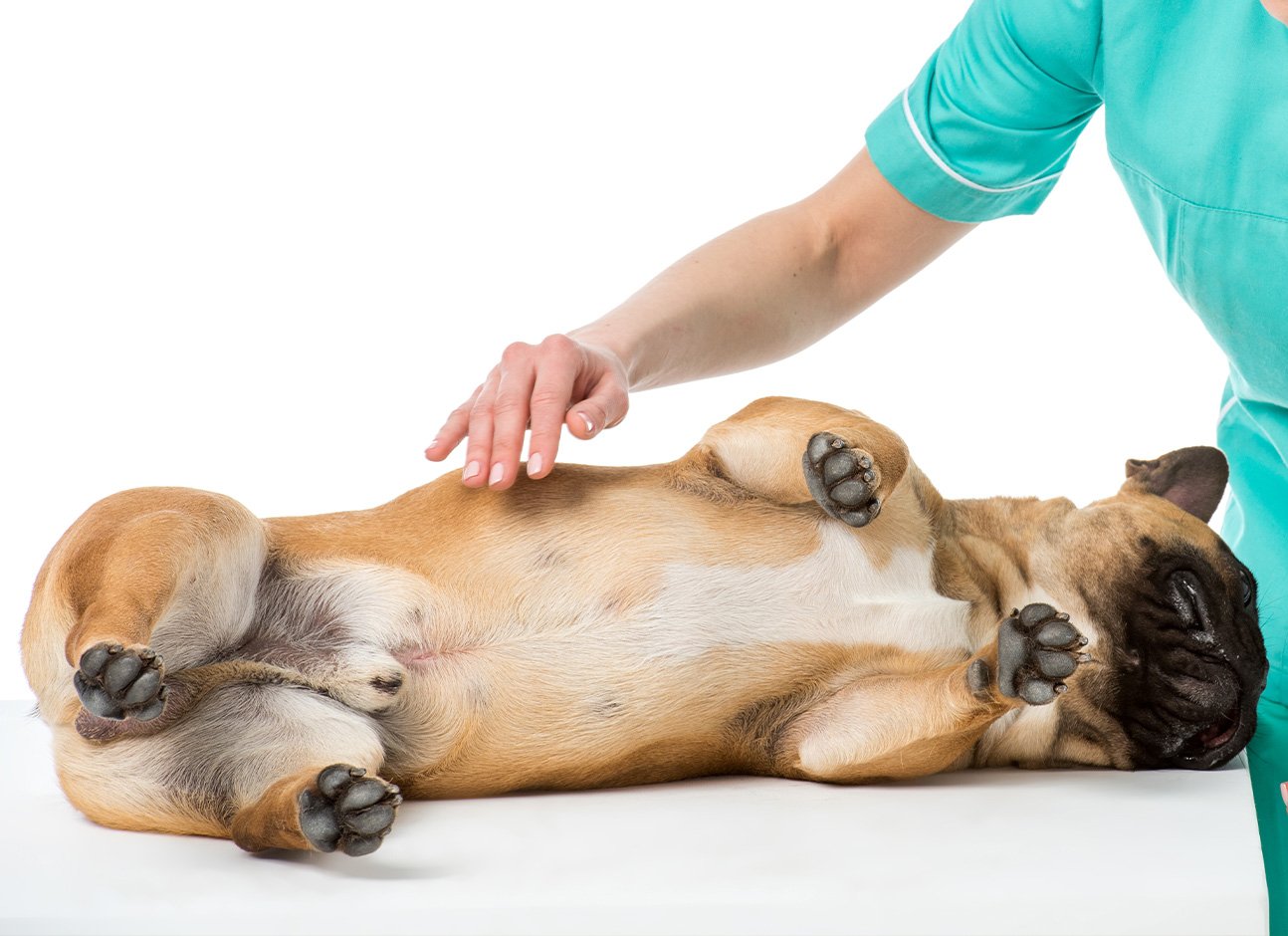
Bloat is diagnosed through physical examination or medical imaging. When veterinarians suspect bloat, they typically look at the clinical presentation of their patient.
Clinical presentations of suspected bloat include abdominal swelling (distension) and the presence of abdominal pain. Restlessness, in addition to those two symptoms, is typical. Advanced stage animals may show extreme signs of distress.
Diagnostic Methods
- X-ray images of the abdomen to visualize stomach twisting and gas accumulation within the stomach.
- Blood chemistry tests to monitor liver and kidney functions, as well as the extent of shock.
- Serum electrolyte panel to determine the degree of internal imbalance.
- Electrocardiogram (ECG) monitoring to detect abnormal heart rhythms.
It is important to obtain quick diagnoses. Delays in obtaining a diagnosis will ultimately reduce the survival rate for dogs with gastric dilatation-volvulus.
Treatment
Prompt treatment is necessary, and typically begins with emergency stabilization before surgery.
Emergency Stabilization
The first step is stabilizing the dog using IV fluids to support blood pressure and circulation. Pain relief and oxygen therapy are given. A tube or needle may be inserted into the stomach to release trapped gas and reduce pressure.
Surgical Treatment
During surgery, untwist the stomach and restore normal anatomical relationships. Additionally, examine for potential tissue necrosis in both the stomach and spleen.
Many times, a procedure called gastropexy is performed at this time, where the stomach is sutured to the abdominal wall to prevent future twisting.
After-Surgery Care
Care for patients undergoing gastropexy includes:
- Careful post-surgical monitoring for potential complications;
- Further fluid administration and pain control;
- The use of antibiotics if the risk of developing infections exists;
- A gradual reintroduction of feeding to allow for proper healing;
- Ongoing monitoring of your pet’s heart and organ function.
Prevention
Although bloat is impossible to entirely eliminate, the likelihood can be dramatically decreased with appropriate pet care and management.
Preventing Bloat
- Feed your pet in small, more frequent portions rather than a single large portion
- Use a slow feeder bowl to decrease the speed of consumption (eating)
- Do not allow your pet to exercise for at least 1 to 2 hours before or after each meal
- Minimize stress on your pet while feeding
- Monitor pets that have a history of being prone to bloating even more closely
- Consider having a preventative gastropexy done in dogs that may be at a higher risk
Owners of larger and deeper chested breeds need to be extra careful due to their increased lifetime risk for developing GDV.
Reviewed by
Dr. Nicoletta Nica
DVM, MRCVS
Dr. Nicoletta was born in Romania and studied veterinary medicine. After graduation Dr. Nicoletta worked for a small animal clinic.


What Is Laparoscopic Spaying?
The laparoscopic spay involves making 2 or 3 very small openings into the abdomen, rather than one big opening as...

Why are Dog Vaccinations Important?
Dogs can be vaccinated against many diseases by introducing a weakened or inactivated form of the disease into...

Why are Cat Vaccinations Important?
Protecting your cat's long term health through vaccination is one of the most critical components of...

What Is Veterinary Oncology?
Veterinary oncology at our clinic focuses on how we diagnose, treat, and manage cancer to improve outcomes and quality...

Pet Relocation
Moving to a new home with your pet involves more than packing boxes and booking travel. Because pets thrive on routine and familiar...

Why Is Routine Grooming Essential?
01
Promotes Skin and Coat Health When you don't brush regularly, dead hair, dirt and oil will accumulate...

What is Holistic Veterinary Care?
Holistic veterinary care is a total medical care system in which your veterinarian evaluates every aspect of your...

Advanced Dental Services
at Modern Vet
We offer full service dental care for dogs and cats, from preventive care to advanced surgery, to ensure...

What is Veterinary Neurology?
Veterinary neurology is a medical speciality concerned with diseases affecting the nervous system. Animals afflicted by...

What is a Wellness Exam?
A wellness exam is an all-inclusive examination of your pet's overall health and condition. A wellness exam is performed...
Why Does Your Pet Need Dermatology Care?
Many pet owners do not realize how significant it is to have their cat, dog, or other small animal receive...

Comprehensive Cat Health Services
Modern Vet offers comprehensive feline care through all phases of a cats life cycle, using advanced diagnostic...
Complete Pet Care for Dogs in Dubai The clinic has a wide variety of veterinary services that support canine health at all ages. Care is provided based...

Why is veterinary ophthalmology important?
Veterinary ophthalmology is concerned with diagnosing, treating and preventing disease in the eyes of...
Role of a Veterinary Cardiologist
A veterinary cardiologist is a veterinarian who has received advanced education and/or training in the diagnosis and...

Modern Rides Designed
for Pet Comfort
Modern Vet Dubai believes that pet transportation does not have to result in compromises. Many regular taxi...

Your Trusted Partner
in Your Pet’s Long Term Health The decision to have your pet spayed or neutered is one of the most responsible actions you can...

The Importance of Vaccination When your pet receives a vaccine, it trains their immune system to attack viruses and bacteria prior to them causing an...
A veterinary consultation is often the first and most important step in managing your pet’s health. When your dogs appear tired, your cats stop eating,...
For years, Modern Vet has been a trusted multi specialist veterinary provider for pet owners in Dubai. With the upgraded Modern Vet Mobile Clinic,...

Hydrotherapy for pets is one of the most rapidly adopted and effective rehabilitative techniques used today in veterinary medicine. The modality of...

Pet Emergency
Care in Dubai
Pet emergencies are unpredictable and time sensitive. Immediate veterinary care is essential for issues like toxin...

What Does Veterinary Orthopaedics Do?
Orthopaedic veterinary care focuses on providing diagnosis, treatment, surgical correction and prevention of...

Why does Veterinary
Physiotherapy Matter?
There are many musculoskeletal, neurologic, and post surgical conditions that can have a significant...

Food Delivery
Providing quality nutrition for your pet can be difficult. Pets have different needs than people do; however, both need the same basic...

The fastest-growing cities, including Dubai, need to prioritize pet welfare because their pet population exceeds available resources when not managed...

What Is Spaying & Neutering? Spaying and neutering are two common veterinary medical treatments which eliminate a dog's ability to reproduce....

What Is Spaying & Neutering?
Spaying or Neutering are two common medical procedures designed to limit the ability of cats to reproduce. Spaying is...