
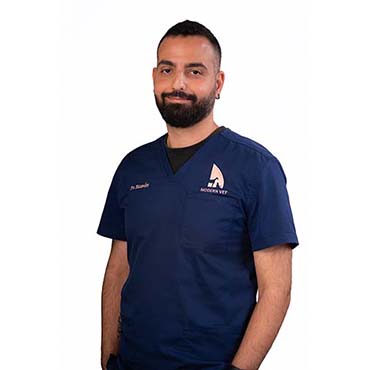
Reviewed by Dr. Ricardos Saad
Updated on 15/12/2025
Reading time 4 min.
Overview
Severity: Low
Life stage: All
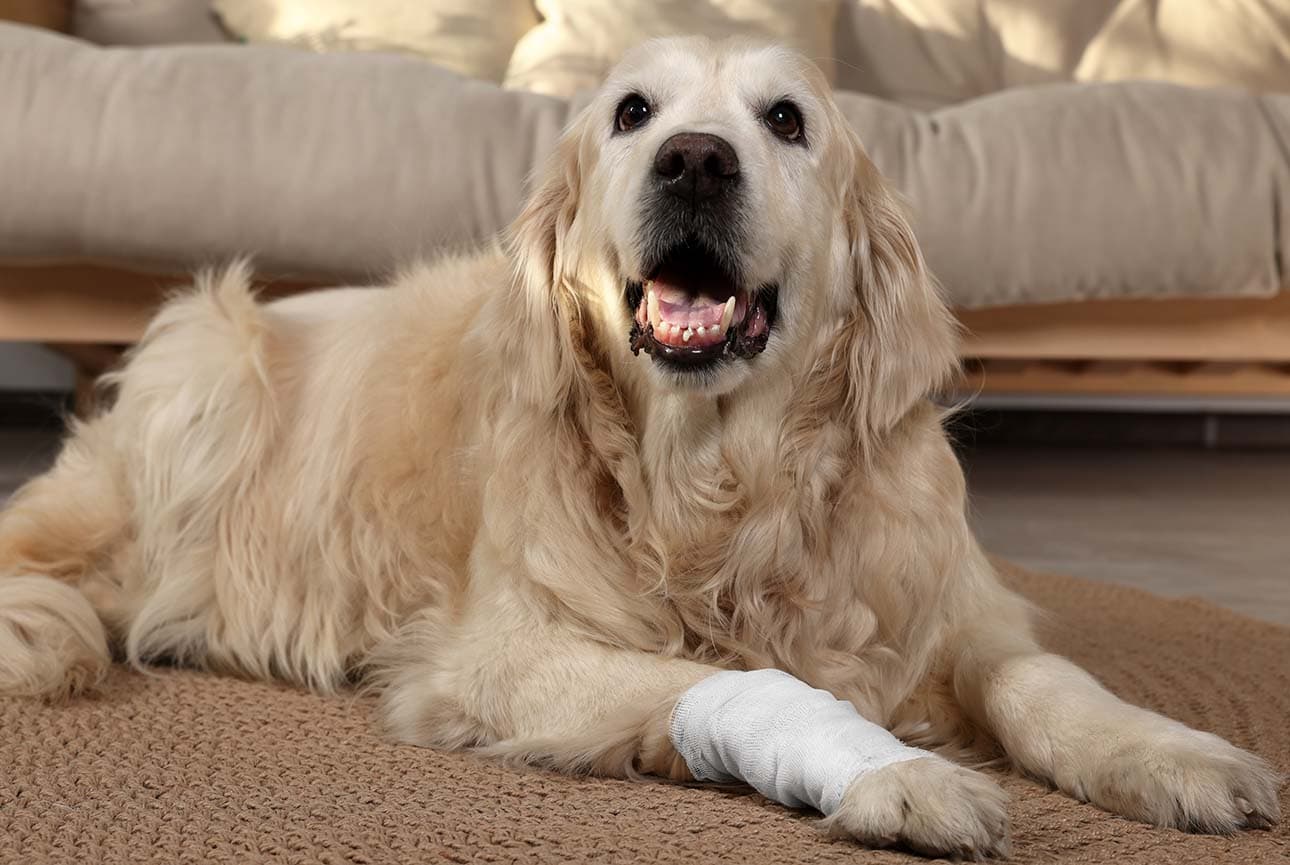
Sprains and strains are common soft tissue injuries that can affect dogs of any age or breed. With prompt attention and proper care, most dogs recover well. In Dubai, extra precautions are important, such as avoiding hot pavements and providing safe spaces for exercise to prevent injuries.
What are sprains and strains in dogs?
Sprains and strains in dogs are one-off injuries to soft tissues like ligaments, tendons, and muscles in their body. These types of injuries cause pain, resulting in a limp or a change in their walking pattern.
Just like in people, sprains and strains are most commonly caused by slips and falls, overuse, or overstretching.
A sprain refers to an injury to a ligament, the band of tissue that supports the joint and connects bone to bone.
A strain refers to an injury to the muscle and/or tendon. A tendon is a strong cord of tissue that attaches a muscle to the bones.
Common locations for these types of injuries include:
- Wrist (carpus)
- Elbow
- Shoulder
- Hip
- Knee
- Hock (tarsus/ankle)
Living in Dubai presents unique challenges. The hot pavements during summer months can cause dogs to slip or move awkwardly to avoid burning their paws, potentially leading to soft tissue injuries. Indoor exercise on slippery marble or tiled floors can also increase the risk of sprains and strains.
Symptoms of sprains and strains in dogs
You might notice some or all of the following in your dog:
- Sudden limping
- Not bearing weight on the affected leg
- Pain: they may react when touched and sometimes even snap or bite
- Reluctance to exercise or difficulty jumping and using the stairs
- Stiffness when walking
- Swelling or heat around the injured area
- Changed behaviour: whimpering, hiding, or decreased appetite due to pain
Are some dogs more at risk of sprains and strains?
Sprains and strains are injuries that can affect any dog, regardless of age or breed. However, certain groups can be more at risk, such as:
- Athletic dogs who frequently jump or turn as they exercise
- Obese dogs: excess tension on the joints and limbs
- Older dogs (7 to 10 years) as the ligaments start to weaken
- Breeds with naturally weaker ligaments, such as Newfoundland, Labrador Retriever, Rottweiler, Staffordshire Terrier, Mastiff, Akita, and Saint Bernard
- Small breeds that jump on and off furniture frequently
How do vets diagnose sprains and strains in dogs?
Sprains and strains are diagnosed using a combination of:
- Assessing the way your dog walks
- Hands-on examination, including a thorough orthopaedic assessment
- Medical history review: to understand how and when the injury occurred
Your vet might recommend:
- Radiographs (X-rays) to rule out fractures or bone abnormalities
- Ultrasound scan to visualise soft tissue damage
- Advanced imaging, such as MRI or CT scans for complex cases
Modern Vet is fully equipped with state-of-the-art diagnostic tools to accurately assess your pet’s condition.
Vet treatment for sprains and strains in dogs
Some mild sprains and strains will require no investigation or medication. Read more about this in the home treatment section below for tips on how to help your dog with a mild injury.
In moderate to severe cases, your vet might recommend one or more of the following, based on your dog’s specific needs:
Medical management:
- Anti-inflammatory medication
- Muscle relaxants
- Pain medications appropriate for your dog’s size and condition
Advanced treatments for severe cases:
- Physiotherapy and rehabilitation
- Acupuncture and massage therapy
- Laser therapy
- Referral to a specialist in sports medicine or orthopaedics
Home treatment for sprains and strains in dogs
Most mild sprains and strains will resolve within a week with strict rest. Here’s how you can help at home:
Strict rest includes:
- Not allowing your dog to use stairs, run, jump, or play roughly
- Limit outdoor time to 5-10 minutes on the lead and just for toileting (even if in your own garden)
- Choose cooler times of day for these brief toilet breaks
- Crate confinement may be necessary when your dog is not closely supervised
- After this resting period, gradually return to exercise through lead walking
Cold therapy:
- Apply a cold compress to the injured area to help control pain and inflammation
- Use cold therapy for 10-15 minutes, 2-3 times daily for the first few days after injury
- Wrap ice packs in a towel; never apply them directly to the skin
Home care tips:
- Keep your home cooler (around 22-24°C) to make your dog more comfortable during recovery
- Use non-slip mats on tiled or marble floors to prevent re-injury
- Ensure fresh water is always available
- Consider raised food and water bowls to reduce strain
Important: Never give your dog human pain medication. Some common painkillers like ibuprofen can be toxic to dogs. Always consult your vet before administering any medication.
How to prevent your dog from getting sprains or strains
Care when off the lead
Dogs are most likely to injure themselves when off the lead, but it’s a balancing act since most dogs are happiest playing freely. Only exercise your dog off-lead in safe places.
Jumping down from high places
Jumping from heights risks injury, especially for small-breed dogs. Consider using pet ramps or steps.
Managing exercise in Dubai
- Walk your dog during cooler hours
- Check pavement temperature with your hand. If it’s too hot for you, it’s too hot for your dog’s paws
- Consider indoor play options during peak summer months
- Just like in humans, before a long and intense exercise session, you should warm up your dog by gently raising the exercise intensity.
Maintain a healthy body condition
Obesity puts more pressure on joints and makes your dog prone to injuries.
Flooring considerations
To prevent injuries:
- Use non-slip rugs or mats in high-traffic areas
- Consider paw grip socks for older or at-risk dogs
- Keep your dog’s nails trimmed for better traction
When should you be worried about your dog with a sprain or strain?
Contact your vet immediately if your dog shows any of the following signs:
Urgent concerns:
- Unable to bear any weight on the leg
- Severe swelling or heat in the affected area
- Visible deformity of the limb
- Persistent or worsening pain despite rest
- Your dog is crying or yelping when the area is touched
Modern Vet offers 24-hour emergency services. Don’t wait if you’re concerned, early intervention often leads to better outcomes and faster recovery.
Recovery from sprains or strains
Recovery from a sprain or strain requires patience, but most dogs make a full recovery.
Recovery timeline:
- Mild injuries: 1-2 weeks
- Moderate injuries: 2-4 weeks
- Severe injuries: 6-8 weeks or longer
During recovery, maintain regular check-ups with your vet to monitor progress. Your vet may adjust the treatment plan based on how your dog responds.
Modern Vet is Dubai’s trusted multi-speciality veterinary hospital, providing compassionate care for your pets since 1995. With 24-hour emergency services and state-of-the-art diagnostic facilities, Modern Vet is equipped to handle everything from routine check-ups to complex orthopaedic cases.
Share this, choose your platform!
Reviewed by
Dr. Ricardos Saad
DVM, MVSc
Dr. Ricardos Saad has always had a deep love and appreciation for animals and their welfare. This passion inspired him to pursue a career in veterinary medicine, which ultimately led to his graduation from the esteemed Faculty of Veterinary Medicine at the Lebanese University in 2015.


Modern Rides Designed
for Pet Comfort
Modern Vet Dubai believes that pet transportation does not have to result in compromises. Many regular taxi...

Your Trusted Partner
in Your Pet’s Long Term Health The decision to have your pet spayed or neutered is one of the most responsible actions you can...

The Importance of Vaccination When your pet receives a vaccine, it trains their immune system to attack viruses and bacteria prior to them causing an...
A veterinary consultation is often the first and most important step in managing your pet’s health. When your dogs appear tired, your cats stop eating,...

Cancer is one of the most significant health challenges facing pets today, affecting millions of dogs and cats worldwide each year. A cancer diagnosis...

Spaying is an important part of being a responsible pet owner. It helps keep the number of pets down and is very good for the health of female dogs and...
For years, Modern Vet has been providing Dubai pet owners with a multi-specialist veterinary provider and service. With the launch of the updated Modern...

Hydrotherapy for pets is one of the most rapidly adopted and effective rehabilitative techniques used today in veterinary medicine. The modality of...

Moving to a new house is a life-altering situation, and it is not only about packing the boxes and securing plane tickets when you have pets. Your furry...

At Modern Vet, proactive preventative healthcare lays the foundation for your pet's long and happy life. From standard blood tests to urinalysis or...

Save our number now so you are prepared if the worst happens.
24-Hour Emergency Hotline: 800-82
Address: Umm Suqeim, Al Wasl Road, Villa #793,...

Your pet’s eyes are one of their most sensitive and important organs. Like people, animals rely on vision to get around the world, communicate with you,...

At Modern Veterinary Hospital, we know that being able to move comfortably is critical to your furry friends’ overall happiness and well-being....

Your pet requires proper oral health maintenance for their general health and wellness. Gum disease, tooth decay and infections affect dogs and cats...

Pet physiotherapy is an important and growing aspect of veterinary medicine, addressing recovery from injury, surgery, chronic conditions or poor...

Your pet requires the best care, including nutritious food, veterinary visits, and professional grooming services for year-round comfort, cleanliness,...

Holistic pet medicine originated in ancient times and now exists as a contemporary integrative system that focuses on treating the complete animal...

You want the best for your pet’s health and longevity, but feeding them well-balanced meals can be difficult. The same principles apply to humans also...

Family pets hold a special place in family life, just like human family members, because they develop various skin and coat issues as they age. Skin...

The fastest-growing cities, including Dubai, need to prioritize pet welfare because their pet population exceeds available resources when not managed...

Here at Modern Veterinary Hospital, we are aware of the fact that having your furry friend deal with neurological disease can be incredibly traumatizing....

Pet cardiology functions as a veterinary medical speciality that diagnoses, treats, and controls Heart and circulatory diseases in animals. A strong...

At ModernVet, we are committed wholeheartedly to improving the wellbeing of your faithful canines with our state-of-the-art dog spay and neuter services....

ModernVet offers professional cat spaying and neutering services that deliver top-level care to feline pets. The procedures form an essential part of...

A powerful alliance based in Dubai's center has established new benchmarks for animal medical care. Modern Vet operates as a top veterinary hospital...

For every devoted cat owner, ensuring the long-term health and happiness of their feline companion is a top priority. Protecting cats from infectious...

The Modern Vet Clinic in Dubai is a top-tier animal hospital providing complete veterinary services for dogs. Our clinic provides veterinary care for...

The Modern Vet clinic in Dubai operates as the leading facility which provides specialized healthcare solutions for cats in the city. The clinic provides...