

Reviewed by Dr. Nicoletta Nica
Updated on 30/06/2026
Reading time 4 min.
Overview
Severity: Low
Life stage: All
Hip dysplasia in dogs is a developmental problems that occur when the canine hip joint doesn’t form correctly. Typically, the femoral head fits into the hip socket smoothly and stably. But instead, in dogs with hip dysplasia, the femoral head and acetabulum do not fit together properly, resulting in joint laxity and abnormal movement within the hip joint. This slippage creates excessive wear and tear on the joint, which results in inflammation and permanent damage to the joint.
Developmentally, it’s a very common orthopedic problem; however, larger and giant breed dogs are most likely to experience hip dysplasia. Genetics does play a significant role in whether your dog develops this condition, but other factors, such as diet, rapid growth rates, and high amounts of exercise, can affect how bad the condition is at its worst point. At times, hip dysplasia will progress into arthritis, resulting in a lifelong source of chronic pain and decreased mobility.
Causes
The primary cause of hip dysplasia is hereditary. It means that if either of your parents has hip dysplasia, then you have a higher chance of developing it as well. However, it isn’t the result of just one gene, but multiple genes working together. Other environmental influences may make the condition worse or faster,
including:
- Fast growth rates in puppies
- Eating too many calories and gaining weight quickly
- Improper nutrition during growth
- Certain types of exercise that involve jumping or landing hard on the joints
- Obesity, because it puts increased pressure on the joints
Symptoms
Sometimes the symptoms of hip dysplasia are apparent while your dog is still young. And sometimes it won’t show up until your dog gets older. There are some cases in which the signs don’t even become apparent until the arthritis has developed.
The typical symptoms of hip dysplasia include:
- Trouble getting up from being seated or lying down
- Won’t run, jump, or climb stairs
- Bunny hopping gait when running
- Painful stiffness, usually occurring after rest or physical activity
- A decrease in activity level
- Hind limb lameness
- Muscle loss in the hind limbs
Depending on how far along the disease process is in your dog, he/she may exhibit mild discomfort when first starting to show symptoms. Over time, the dog’s discomfort will increase as more damage is done to his/her joint.
Risks
As previously stated, hip dysplasia is a progressive condition. If untreated/unmanaged, hip dysplasia will generally continue to deteriorate over time. The primary risk associated with hip dysplasia is the potential development of osteoarthritis, which produces chronic pain and diminished mobility. Other risks
include:
- Damage to the joint from continued instability
- Muscle wastage due to lack of activity
- Weight gain due to reduced activity levels
- Long-term pain from the degenerative changes in the joint
- Additional injuries caused by unusual gait patterns.
Diagnosis
A veterinarian identifies hip dysplasia by conducting an evaluation consisting of both physical examination and diagnostic imaging.
The veterinarian performs a physical examination to look at signs of pain, loss of range of motion, and joint laxity in the hips and evaluates the gait of the dog to see if there has been any abnormality in how the dog moves.
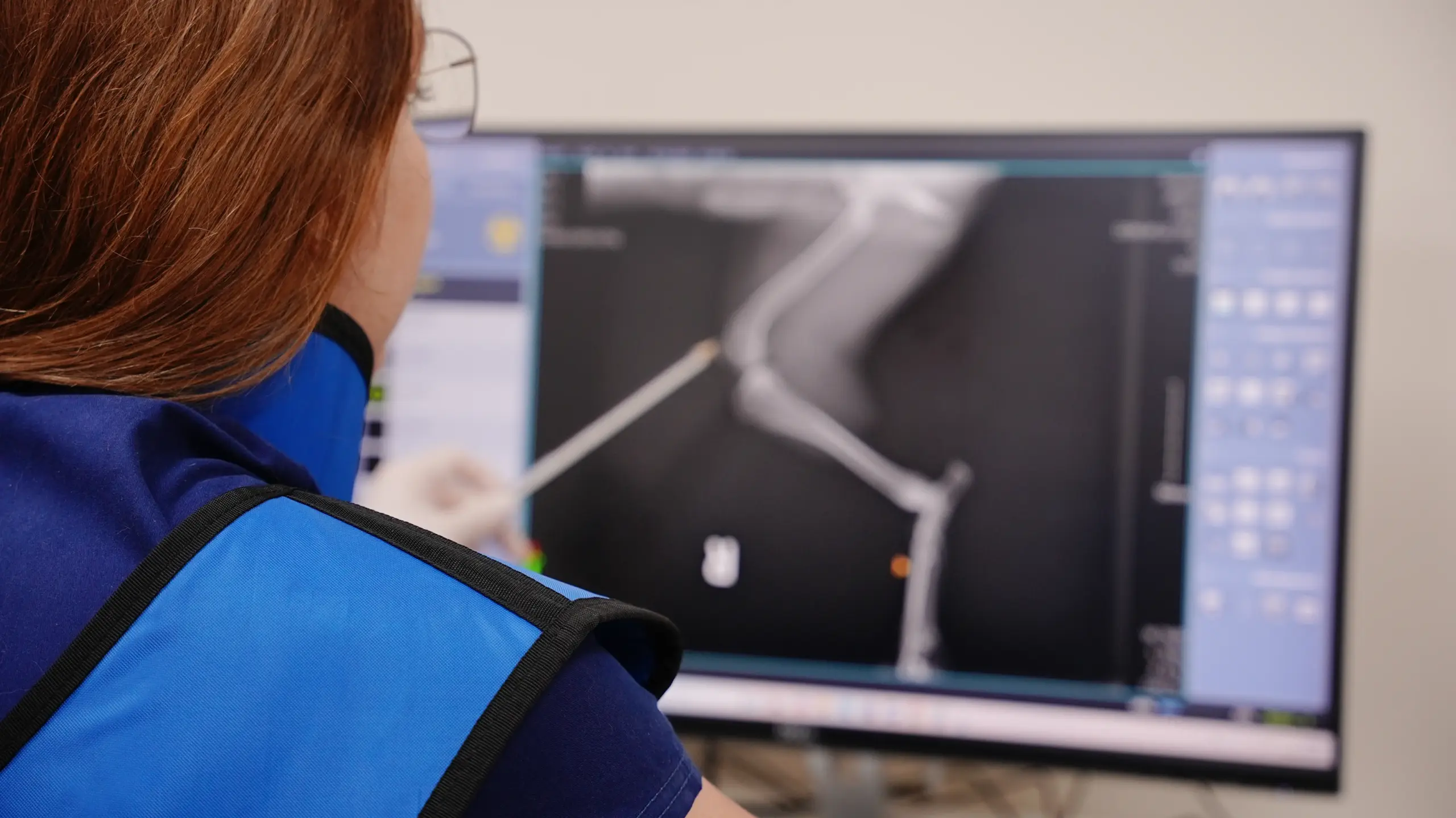
X-rays are the best diagnostic tool. X-rays allow the veterinarian to confirm that the joints have become loose, provide information on the structure of the bones, and can identify arthritic changes within the joints.
For certain types of diagnostic imaging exams, sedation will be used so the veterinarian can take X-ray images when the dog’s body parts are in the correct position.
Treatment
Treatment will depend upon the degree of illness and the overall health of the dog. Most importantly, treatment can help relieve pain, increase movement, and possibly slow down the development of the disease.
Medical Management
Treatment for mild to moderate conditions generally includes non surgical methods such as:
- Pain relief and anti-inflammatory drugs.
- Various forms of joint supplements (glucosamine, chondroitin, omega-3 fatty acids)
- Weight loss in overweight dogs to reduce stress on the joints
- Exercise that is controlled and has minimal impact (walking or swimming).
Physical Therapy
A rehabilitation program to strengthen muscles and restore a greater level of joint function is also beneficial. Various treatments may be utilized in this area, including hydrotherapy and stretching programs, along with physiotherapist supervised programs.
Surgical Options
Severe conditions are sometimes treated by surgically reconstructing the joint. In some cases, a total hip replacement is needed based on the age and condition of the dog.
Surgical options may include procedures such as total hip replacement or femoral head ostectomy (FHO) depending on the dogs age, size, severity of disease, and overall health.
Prevention
Although hip dysplasia is largely influenced by genetics, the level of severity may be able to be diminished through proper management as a puppy grows.
Preventive measures include;
- Puppies should eat an appropriate large breed puppy food
- The puppy should be fed so that he/she does not grow too fast or become overweight
- Rapidly growing puppies should limit their high-impact activities (i.e., jumping, running)
- The adult dog should maintain a healthy weight throughout his/her life
- Responsible breeding practices where parents have been tested for hip dysplasia are essential
The manner in which a puppy is managed early in its development will greatly influence the extent of potential long term joint issues.
Reviewed by
Dr. Nicoletta Nica
DVM, MRCVS
Dr. Nicoletta was born in Romania and studied veterinary medicine. After graduation Dr. Nicoletta worked for a small animal clinic.


What Is Laparoscopic Spaying?
The laparoscopic spay involves making 2 or 3 very small openings into the abdomen, rather than one big opening as...

Why are Dog Vaccinations Important?
Dogs can be vaccinated against many diseases by introducing a weakened or inactivated form of the disease into...

Why are Cat Vaccinations Important?
Protecting your cat's long term health through vaccination is one of the most critical components of...

What Is Veterinary Oncology?
Veterinary oncology at our clinic focuses on how we diagnose, treat, and manage cancer to improve outcomes and quality...

Pet Relocation
Moving to a new home with your pet involves more than packing boxes and booking travel. Because pets thrive on routine and familiar...

Why Is Routine Grooming Essential?
01
Promotes Skin and Coat Health When you don't brush regularly, dead hair, dirt and oil will accumulate...

What is Holistic Veterinary Care?
Holistic veterinary care is a total medical care system in which your veterinarian evaluates every aspect of your...

Advanced Dental Services
at Modern Vet
We offer full service dental care for dogs and cats, from preventive care to advanced surgery, to ensure...

What is Veterinary Neurology?
Veterinary neurology is a medical speciality concerned with diseases affecting the nervous system. Animals afflicted by...

What is a Wellness Exam?
A wellness exam is an all-inclusive examination of your pet's overall health and condition. A wellness exam is performed...
Why Does Your Pet Need Dermatology Care?
Many pet owners do not realize how significant it is to have their cat, dog, or other small animal receive...

Comprehensive Cat Health Services
Modern Vet offers comprehensive feline care through all phases of a cats life cycle, using advanced diagnostic...
Complete Pet Care for Dogs in Dubai The clinic has a wide variety of veterinary services that support canine health at all ages. Care is provided based...

Why is veterinary ophthalmology important?
Veterinary ophthalmology is concerned with diagnosing, treating and preventing disease in the eyes of...

Role of a Veterinary Cardiologist
A veterinary cardiologist is a veterinarian who has received advanced education and/or training in the diagnosis and...

Modern Rides Designed
for Pet Comfort
Modern Vet Dubai believes that pet transportation does not have to result in compromises. Many regular taxi...

Your Trusted Partner
in Your Pet’s Long Term Health The decision to have your pet spayed or neutered is one of the most responsible actions you can...

The Importance of Vaccination When your pet receives a vaccine, it trains their immune system to attack viruses and bacteria prior to them causing an...
A veterinary consultation is often the first and most important step in managing your pet’s health. When your dogs appear tired, your cats stop eating,...
For years, Modern Vet has been a trusted multi specialist veterinary provider for pet owners in Dubai. With the upgraded Modern Vet Mobile Clinic,...

Hydrotherapy for pets is one of the most rapidly adopted and effective rehabilitative techniques used today in veterinary medicine. The modality of...

Pet Emergency
Care in Dubai
Pet emergencies are unpredictable and time sensitive. Immediate veterinary care is essential for issues like toxin...

What Does Veterinary Orthopaedics Do?
Orthopaedic veterinary care focuses on providing diagnosis, treatment, surgical correction and prevention of...

Why does Veterinary
Physiotherapy Matter?
There are many musculoskeletal, neurologic, and post surgical conditions that can have a significant...

Food Delivery
Providing quality nutrition for your pet can be difficult. Pets have different needs than people do; however, both need the same basic...

The fastest-growing cities, including Dubai, need to prioritize pet welfare because their pet population exceeds available resources when not managed...

What Is Spaying & Neutering? Spaying and neutering are two common veterinary medical treatments which eliminate a dog's ability to reproduce....

What Is Spaying & Neutering?
Spaying or Neutering are two common medical procedures designed to limit the ability of cats to reproduce. Spaying is...