

Reviewed by Dr. Rocio Mena
Updated on 11/12/2025
Reading time 4 min.
Overview
Severity: Low
Life stage: All
Torn nails in cats aren’t as common as in dogs, but when they do occur, they can be very painful. A torn nail may not be life-threatening, but it often causes bleeding, limping, and discomfort that needs attention. Most cases heal quickly, though sometimes it takes a vet visit to remove the damaged nail or stop infection.
In Dubai, cats who live indoors all the time are at more risk of broken nails, as are older cats who don’t wear their nails down naturally. Long nails are more likely to snag on carpets, furniture, or outdoor plants. Knowing how to recognise and respond to a torn nail can make a big difference to your cat’s comfort and recovery. If you think your cat has a torn nail, it’s best to have them checked by your vet.
What do we mean by “torn nails”?
Normal cat nails:
- 5 nails on each front paw (including a dew claw)
- 4 nails on each back paw
Some cats have extra toes (polydactyly) and therefore have more nails at risk. They may also not wear normally because of an altered paw shape.
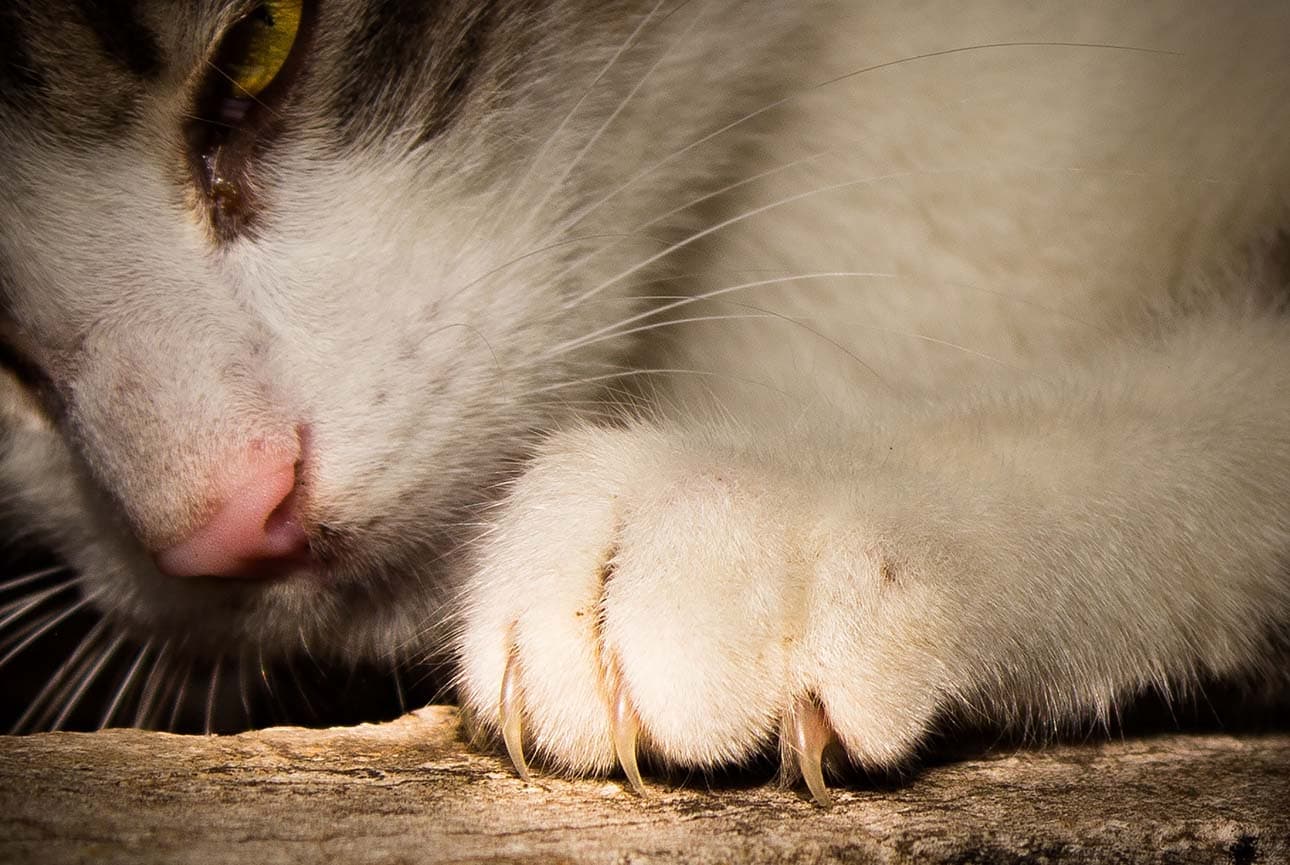
A cat’s nail has two main parts:
- Outer layer: tough keratin, like a human fingernail
- Quick: the sensitive inner section containing blood vessels and nerves
When the nail splits or tears into the quick, it’s painful and will likely bleed.
Common causes of torn nails
- Snagging a claw on carpets, furniture, or outdoor plants
- Awkward landings after jumping
- Overgrown nails, especially in indoor or less active cats
- Clipping nails too short during trimming
- Brittle nails in older cats
Symptoms of torn nails
Signs can vary depending on how badly the nail is damaged:
- Limping or refusing to put weight on the paw
- Holding up the paw or hiding away
- Constant licking or chewing at the paw
- Bleeding or small blood stains on the floor or bedding
- Crying, hissing, or reacting aggressively when the paw is touched
- Swelling or redness around the nailbed
- A nail that looks cracked, bent, or partly detached
Cats at a higher risk of torn nails
Any cat can break or tear a nail, but some are more prone:
- Older cats: nails become thicker and more brittle with age
- Less active cats: sedentary cats may have longer nails that are more likely to catch
- Indoor-living cats: nails don’t wear down naturally on soft furnishings or tiled floors
- Polydactyl cats: more toes and claws mean more potential for damage
Diagnosing torn nails
Your vet can usually diagnose a torn nail during a simple physical exam. Tests are rarely needed unless several nails are affected or your vet suspects an underlying problem.
Further tests:
- Nailbed biopsy: collecting a sample for laboratory testing
- Skin scrapes
- Blood and urine tests: checking general health
- Imaging: X-rays if trauma or bone damage are suspected
Veterinary treatment for torn nails
Treatment depends on the extent of the injury and whether infection is present.
- Cleaning the nail and controlling bleeding
- Removing the damaged portion of the nail: likely under sedation, where the quick is involved, and the paw is painful
- Bandaging the paw to protect the wound
- Prescribing pain relief medication
- Providing antibiotics if infection is present or likely
Most cats recover quickly after treatment, with the nail regrowing over the following weeks or months.
Home care for cats with torn nails
If you notice your cat has a torn nail:
- Apply gentle pressure with a clean cloth to stop bleeding: it should stop in less than 5 minutes
- Cornstarch or flour can help with clotting if bleeding continues
- Clean the paw with cooled boiled water and a pinch of salt (1 tsp salt in 500ml water)
- Keep the area clean and dry, and monitor for signs of infection
- Prevent licking or chewing by using a buster (cone) collar if needed
- Encourage rest until the paw is comfortable again
If the nail is still attached after 24–48 hours, or your cat seems to be in pain, book a vet appointment without further delay.
How to prevent torn nails in cats
- Check your cat’s nails once or twice a week
- Trim nails if they become too long, especially for indoor or older cats. Ask your vet to show you the correct method, or book regular nail trimming at the clinic
- Provide scratching posts and varied surfaces to encourage natural nail wear
- Keep your cat active and maintain a healthy, balanced diet for strong nails
When to worry
See your vet urgently if:
- The nail is still bleeding after 5 minutes
- Your cat is in obvious pain and won’t walk on the paw
- You notice swelling, pus, or a bad smell
Contact your vet for advice if:
- The nail has fallen off cleanly, but you’re unsure about infection and wound care
- You’d like guidance on safe nail trimming or prevention
- Your cat has repeated issues with brittle or broken nails
Are people or other pets at risk?
Torn nails are not contagious. The only concern is infection. If there’s pus or discharge, wash your hands after handling your cat’s paw or bandages.
Worried your cat has a torn nail?
Book a check-up or same-day appointment at Modern Vet Hospital in Dubai. Their experienced veterinary team can safely treat damaged claws, relieve your cat’s pain, and prevent infection. From emergency care to routine nail maintenance, Modern Vet Hospital is your trusted clinic in Dubai for professional, compassionate pet care.
Share this, choose your platform!
Reviewed by
Dr. Rocio Mena
DVM
Dr. Rocio Mena was born in Spain and discovered her passion for veterinary medicine early in life. She pursued this dream and graduated from CEU University in Spain in 2018 with a degree in…



Modern Rides Designed
for Pet Comfort
Modern Vet Dubai believes that pet transportation does not have to result in compromises. Many regular taxi...

Your Trusted Partner
in Your Pet’s Long Term Health The decision to have your pet spayed or neutered is one of the most responsible actions you can...

The Importance of Vaccination When your pet receives a vaccine, it trains their immune system to attack viruses and bacteria prior to them causing an...

A veterinary consultation is often the first and most important step in managing your pet’s health. When your dogs appear tired, your cats stop eating,...

Cancer is one of the most significant health challenges facing pets today, affecting millions of dogs and cats worldwide each year. A cancer diagnosis...

Spaying is an important part of being a responsible pet owner. It helps keep the number of pets down and is very good for the health of female dogs and...

For years, Modern Vet has been providing Dubai pet owners with a multi-specialist veterinary provider and service. With the launch of the updated Modern...

Hydrotherapy for pets is one of the most rapidly adopted and effective rehabilitative techniques used today in veterinary medicine. The modality of...

Moving to a new house is a life-altering situation, and it is not only about packing the boxes and securing plane tickets when you have pets. Your furry...

At Modern Vet, proactive preventative healthcare lays the foundation for your pet's long and happy life. From standard blood tests to urinalysis or...

Save our number now so you are prepared if the worst happens.
24-Hour Emergency Hotline: 800-82
Address: Umm Suqeim, Al Wasl Road, Villa #793,...

Your pet’s eyes are one of their most sensitive and important organs. Like people, animals rely on vision to get around the world, communicate with you,...

At Modern Veterinary Hospital, we know that being able to move comfortably is critical to your furry friends’ overall happiness and well-being....

Your pet requires proper oral health maintenance for their general health and wellness. Gum disease, tooth decay and infections affect dogs and cats...

Pet physiotherapy is an important and growing aspect of veterinary medicine, addressing recovery from injury, surgery, chronic conditions or poor...

Your pet requires the best care, including nutritious food, veterinary visits, and professional grooming services for year-round comfort, cleanliness,...

Holistic pet medicine originated in ancient times and now exists as a contemporary integrative system that focuses on treating the complete animal...

You want the best for your pet’s health and longevity, but feeding them well-balanced meals can be difficult. The same principles apply to humans also...

Family pets hold a special place in family life, just like human family members, because they develop various skin and coat issues as they age. Skin...

The fastest-growing cities, including Dubai, need to prioritize pet welfare because their pet population exceeds available resources when not managed...

Here at Modern Veterinary Hospital, we are aware of the fact that having your furry friend deal with neurological disease can be incredibly traumatizing....

Pet cardiology functions as a veterinary medical speciality that diagnoses, treats, and controls Heart and circulatory diseases in animals. A strong...

At ModernVet, we are committed wholeheartedly to improving the wellbeing of your faithful canines with our state-of-the-art dog spay and neuter services....

ModernVet offers professional cat spaying and neutering services that deliver top-level care to feline pets. The procedures form an essential part of...

A powerful alliance based in Dubai's center has established new benchmarks for animal medical care. Modern Vet operates as a top veterinary hospital...

For every devoted cat owner, ensuring the long-term health and happiness of their feline companion is a top priority. Protecting cats from infectious...

The Modern Vet Clinic in Dubai is a top-tier animal hospital providing complete veterinary services for dogs. Our clinic provides veterinary care for...

The Modern Vet clinic in Dubai operates as the leading facility which provides specialized healthcare solutions for cats in the city. The clinic provides...